Who sells to healthcare providers?
People who run care homes, surgeries, dental practices, opticians and pharmacies spend money on much more than clinical kit. They need cleaning and laundry, uniforms and workwear, furniture and flooring, software and phone systems, training, recruitment, insurance and vehicles. A great deal of that spend sits outside the clinical side, which is why a non-clinical supplier can sell here without any clinical claims at all.
The buyers are as varied as the sellers. A residential home may be one owner with one building, or one building among many in a provider group. A GP surgery is usually a partnership. A dental practice may belong to a principal dentist or to a corporate group. An optician or a pharmacy may be a single shop or one of a chain. Each decides in its own way.
This guide covers selling goods, services and software to healthcare businesses. Research the provider and its purchasing arrangements using appropriate business information. You do not need identifiable patient records to start that discussion. If your service would handle personal information, establish the data protection and contractual requirements with the buyer before arranging access.
Why are healthcare providers hard to sell to?
The first difficulty is that the people you want are busy with people, not paperwork. A registered manager running a home, a practice manager in a full surgery or a dentist between patients has little time for a supplier email, and a front desk or reception is built to protect that time.
Providers need evidence that a supplier can meet the requirements of its product, service and contract. Even a non-clinical service can involve site access, safety checks or personal data. Ask which checks apply to your offer and prepare the relevant evidence. Do not describe a product as exempt simply because it is sold for administrative work.
The third is that routes differ. An NHS trust or a commissioning board buys through tenders and frameworks. A private care home, an independent optician or a dental practice buys the way a small business does. The same product needs a different approach for each, so ask first how they buy.
The owner decides
- You approach the owner or manager
- They check it fits the way they work
- A small trial
- It becomes the regular order
Often a partner, principal or owner-manager with the final word.
Head office sets the supplier
- You approach the group
- Central purchasing or operations
- Supplier checks
- Sites order from the approved list
Sites can ask for a product but may not be able to add it alone.
A tender or framework
- You find the notice or framework
- Express interest and meet the criteria
- Contract awarded
- Buyers order from it
Check whether this procurement route is available to the particular provider and purchase.
How is healthcare put together in the UK?
In England, the Care Quality Commission regulates care homes, GP practices and dental services within its scope. Other UK nations have their own regulators and systems. Care providers range from single homes to national groups, with independent adult social care providers represented by bodies including Care England. Check the provider, location and service before describing its regulatory obligations.
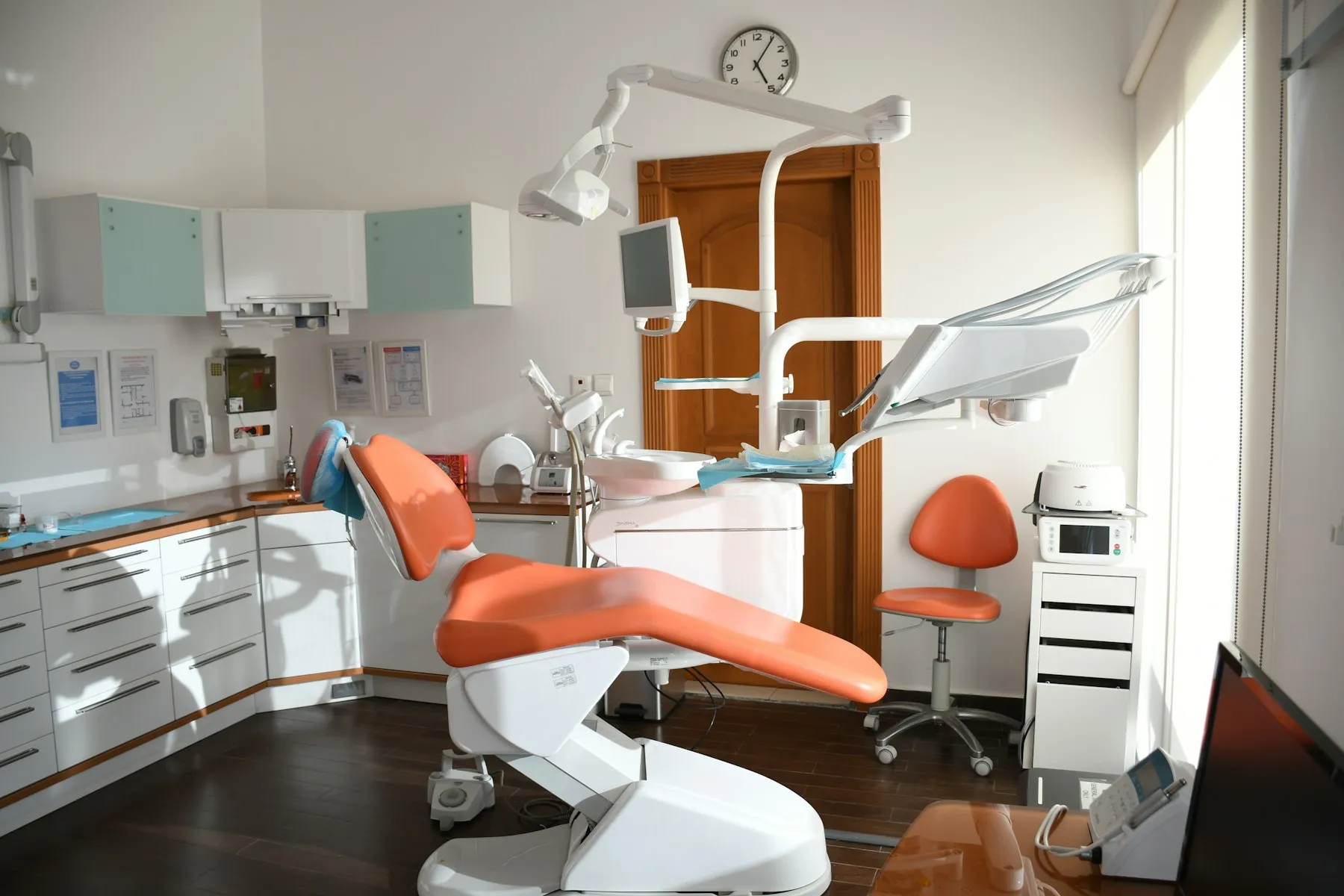
GP surgeries hold an NHS contract, usually as a partnership of GPs who share responsibility for it. In England, integrated care boards commission general practice and, under delegation from NHS England, dental, optical and pharmacy services. Practices may work together in primary care networks. Dentistry mixes NHS contracts with private care, and some practices belong to corporate groups represented by the Association of Dental Groups. The BDA represents dentists.
Opticians and pharmacies sit on the high street as well as in healthcare. Opticians are regulated by the General Optical Council, which registers businesses as well as optometrists and dispensing opticians; FODO and the Optical Confederation speak for providers. The General Pharmaceutical Council regulates pharmacies in Great Britain; Northern Ireland has a separate regulator. Community Pharmacy England represents NHS community pharmacy owners in England.
The legal forms vary as much as the buyers. Many are limited companies, while GP practices are often partnerships and some dentists, opticians and pharmacists trade as individuals. Under PECR, the UK's rules for electronic marketing, a limited company counts as a corporate subscriber and a sole trader counts as an individual.
Counts as a corporate subscriber
You can send a relevant business email without asking first, as long as you say who you are and give an easy way to opt out.
Counts as an individual
A cold marketing email needs their consent first. Partnerships in Scotland are the exception: they count as corporate subscribers.
Are limited companies and sole traders both in the healthcare list?
Yes, both. The UK book holds healthcare providers across several legal forms. Care homes are very often limited companies, from single-home operators to large groups. Corporate dental and pharmacy chains are companies too. GP practices are usually partnerships, and some dentists, opticians and pharmacists trade as individuals or as small partnerships.
The two behave differently for a supplier. A limited company files its directors and a registered office with Companies House, so the record can name who runs it. A GP partnership or a sole practitioner is not on the company register, so the record often shows the practice name, address and phone instead of a director. Each record shows what we hold.
If you want only one kind, filter for it. A supplier of multi-site services may want limited companies and groups. A supplier of one-off equipment may do well with owner-run practices. Sole traders are hard to count because no single public UK register lists them all, so treat the list as a strong start, not a full census.
What does it cost to start with the wrong person?
A home manager may want to try your product but need group approval, while a practice manager may place orders within a budget set by partners. If you miss either part of that process, a quotation or trial can stall. Ask who orders, who approves a change and which checks must be completed.
The effect of a missed delivery depends on the item and the provider’s contingency arrangements. Ask how stock is monitored, what happens if an order is late and who deals with it. Let the manager describe the effect on staff time and continuity before discussing delivery frequency or reserve stock.
Pitching clinical claims
If you are not a clinical supplier, do not make clinical claims. Stay with the practical problem you solve and let the regulators talk about care.
Treating all five sectors alike
A care home, a surgery and a pharmacy decide differently. Write one first email for each, not one for all.
Emailing an individual without consent
Check the provider’s actual legal form. A one-person practice can be incorporated, and Scottish partnerships have different PECR treatment from other ordinary partnerships.
Who decides what a healthcare provider buys?
The right person depends on what you sell and on the kind of provider. For day-to-day supplies, start with whoever runs the site. For a system, a contract or anything that spans many sites, start with the director or the group's central team.
Company records in the UK book show directors and their roles. Surgeries, many dental practices and sole traders are not on the register, so their records lean on the practice name, address and phone. In those cases ring and ask who handles supplies, rather than assuming it is the partner or the owner.
Registered manager
- What they care about
- Running a safe home day to day, rotas, inspections and what residents and families see.
- Open with
- A practical gap on the floor: supplies that run short or a routine that wastes staff time.
Nominated individual or director
- What they care about
- Oversight of the provider across sites, cost, and the link with the regulator.
- Open with
- Something that helps several homes at once, with a trial in one.
Practice manager
- What they care about
- Running the business side, from staff and premises to orders, for the partners.
- Open with
- A supplies or systems problem that takes the team's time.
Practice owner or principal dentist
- What they care about
- Chair time, patient flow, the team, and keeping costs under control.
- Open with
- A product or service that saves chair time or covers a gap in the day.
Area or operations manager
- What they care about
- A group of sites working to one standard, with approved suppliers.
- Open with
- How your offer fits their standard list and how a site could trial it.
Superintendent or responsible pharmacist
- What they care about
- Running the pharmacy legally and safely, and the daily flow of work.
- Open with
- A non-clinical supplier problem, after confirming who orders.
How do you find healthcare providers in the UK?
In the UK book, healthcare is not one sector but several. Choose Care Homes & Later Living, Dentists, Doctors & Medical, Opticians or Pharmacies, whichever fits your product, and add them as separate searches if you sell to more than one. Each list has its own buyers, so keep them apart.
Narrow by the locations you can serve, the provider’s legal form and the contact information available. A named director can help with company research; a business phone may be the route to the practice manager. Check the provider’s current information alongside register changes. Searching is free before you reveal contacts.
If you need to be exact, SIC codes help. Care homes register mostly under 87100 for residential nursing care and 87300 for residential care for the elderly and disabled. Dental practices use 86230, GP practices 86210, pharmacies 47730 and opticians 47782. Records without a code still carry a plain-English sector.
Choose a healthcare sector and your area. Searching is free on every plan.
What should you say to a healthcare provider?
Explain what you supply and ask how that purchase is managed. For housekeeping products, find out who plans orders and how delivery frequency is chosen. The home may have an arrangement that works well. That is useful to know before you discuss a change of supplier or a trial.
Keep clinical territory out of it unless you supply clinical goods. Do not tell a manager how to care for patients or interpret a regulator's rules. Refer to the regulator only if your product genuinely helps with a documented requirement, say what you can prove, and offer to share it. A short note, a named person and a single question are enough for a first message.
If the manager mentions shortages, ask which items and when they occur. Explore what the team has to do when a delivery is late, without making claims about patient outcomes. Then ask what a more dependable ordering arrangement would need to achieve for the manager to consider a trial.
A day-to-day gap
Ask what runs short, arrives late or takes staff time, and offer to fix that one thing first.
Check the buying contact
Use current provider information to establish who handles supplies and whether a group sets the approved list.
Proof from nearby
If another home or practice in the area already uses you, say so and offer a short reference.
Hello Mrs Hale,
We supply housekeeping and laundry products to residential homes on a weekly delivery.
Who looks after those supplies at Larkfield Court, and how are orders planned?
If you are reviewing suppliers, I can send product details, delivery days and opening-order terms.
Sam
Independent, corporate group or NHS-commissioned: what changes?
One product can meet three very different buying processes. Here is how the three kinds of buyer usually differ in healthcare. Every provider is different, so treat it as a starting point and ask.
| Independent home or practice | Corporate or provider group | NHS-commissioned route | |
|---|---|---|---|
| Who decides | The owner, a partner, the principal or the manager | A central purchasing, operations or estates team | A buying team at a trust or board, set by a tender |
| How you find them | The business record and its phone | Company records and the group's head office | Published tender notices and frameworks |
| How long it can take | Can be quick when the need is clear | Usually longer, as it is a central decision | Governed by the tender timetable |
| What they will ask for | Price, reliability and a reason to try | Supplier checks, insurance and standard terms | Formal criteria, certificates and a compliant bid |
| Data and security checks | Ask about supplier checks, site access and data requirements for the service | Group due diligence, with data and security checks where relevant | Requirements in the tender, including applicable NHS digital standards |
| Best first contact | The owner or practice manager | The category or operations lead | The tender portal, not an individual |
Before you approach any provider
- A clear statement of what you supply and what you do not, with no clinical claims
- Public liability and any other insurance the buyer may ask to see
- Whether you handle people's data. If not, say so; if so, be ready to show your data protection practice
- Checks on your staff if they will be on site, and how you manage them
- Reference sites: other homes, practices or shops you already supply
- Delivery and service routes for the area you cover
- For NHS tenders: the criteria in the notice and whether your product needs certificates
- A proposed trial with the scope, approval process and success measures agreed with the buyer
Questions people ask about selling to healthcare providers
Is there a database of care homes, GP surgeries and dentists in the UK?
Yes. The UK book holds care homes, doctors and medical practices, dentists, opticians and pharmacies as separate sectors. Search any of them free by area and by what we hold, and reveal only the contacts you want.
Who buys for a care home?
It depends on the home. In a single owner-run home it is usually the owner or the registered manager. In a group, supplier choices are often agreed centrally, with the home manager ordering from an approved list. Ask which model applies before you pitch.
Who decides what a GP practice buys?
A GP practice is usually run by partners who hold the NHS contract, with a practice manager running the business day to day. Clinical systems are typically bought through NHS England's framework, while everyday supplies are bought by the practice itself.
How do I sell to NHS trusts?
Trusts mostly buy through published tenders and frameworks. NHS Supply Chain says products reach its catalogue through a compliant tender, and suggests engaging its category team well before a contract ends. Watch notices on Find a Tender and check the criteria first.
Do I need DSPT or clinical safety certification to sell to the NHS?
Requirements depend on the service, data access and contract. The Data Security and Protection Toolkit applies to organisations with access to NHS patient data and systems. DCB0129 covers clinical risk management for manufacturers of health IT. Check the procurement documents and confirm applicable standards with the buyer; a non-clinical label alone does not decide this.
Can I get a list of healthcare providers that are sole traders?
Yes. The UK book includes sole traders and small partnerships as well as limited companies, and each record shows the legal form we hold. Filter by sector and form, then check the rules for emailing individuals before you write.
Can I email care homes and dentists without consent?
You can send a relevant business email to a limited company or LLP if you say who you are and offer an easy opt-out. Sole traders and most partnerships count as individuals and need consent first. Each record in the UK book says which it is.
How do I sell to dental practices?
Find out whether the practice is independently owned or part of a group. An owner can decide quickly; a group often sets approved suppliers centrally. Offer something that saves chair time or covers a recurring gap, and start with a small trial.
Do opticians and pharmacies buy differently from clinics?
Often yes. Many are shops as well as clinical services, so they buy stock, fit-out and workwear like retailers, and clinical equipment like practices. Chains tend to buy centrally, while independents decide in the shop. Ask who orders before you pitch.
Can I search by SIC code?
Yes. Records carry the SIC 2007 codes from the register and a plain-English sector for businesses without one, so you can search by either. Care homes, dentists and pharmacies each sit under their own codes.
Do I pay to search?
No. Search and filters are free on every plan. Your allowance is only used when you reveal a new contact, and one you've already revealed never counts again.
Can I put the providers into my CRM?
Yes. Export the contacts you reveal as a CSV for any CRM, or work them in the Adapt Leads CRM with email, LinkedIn and calls in one place.
Sources for this guide
- CQC: services regulated in England
- NHS: Data Security and Protection Toolkit
- NHS: DCB0129 clinical risk management
For marketing rules, see the ICO’s business-to-business marketing guidance. Sector codes can be checked in the Companies House SIC list.