Contents
How do you build a useful prospect list of UK accountancy practices?
Define the type of practice your service can help, then search by relevant location, size and role. Review sample records to see whether the results match that brief and whether the contact details have useful evidence. The finished list should tell a seller why each firm fits and what work to ask about, rather than provide a large set of names with no context.
- An industry label can include firms with different clients and services.
- Company and trading names may differ; the legal entity helps distinguish similar names.
- A recent company event can guide further research without establishing a buying need.
Start by describing the kind of accountancy practice your service can help. “Accountants” is too broad to guide a sales conversation. Define the kind of firm, the place it works and the person who is likely to care about your offer.
Write a search brief
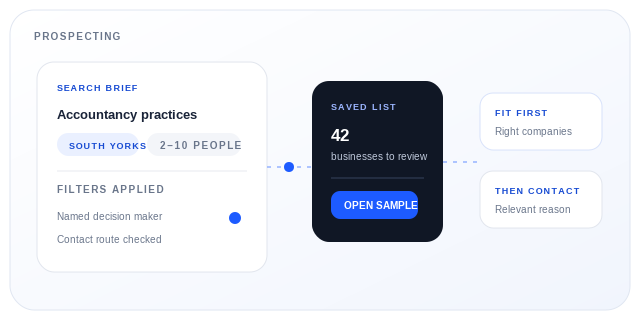
Put the target in one sentence before you open a database. For example: independent accountancy practices in South Yorkshire with a small team, where a sales-data product could help them identify and reach their own business clients. Change the sector, location and size to match your actual offer.
Narrow the market by fit
Filter by sector and area first. Add company size or legal form only if it helps separate a good fit from a poor one. A narrow set of filters can hide the right firm if your assumptions are wrong, so check the result count and adjust one filter at a time.
For registered companies, use the company number and original record to distinguish similar names. Treat trading names, branches and group companies as separate details to verify.
Review a sample before saving
Open several records across the list. Check that each practice is active, in the right place and the kind of business you intended to find. Look at the source and date for the contact fields your team plans to use. Remove firms that only match because of a broad sector label.
Prioritise with context
A new appointment, office move or hiring update may suggest a useful research question. It does not prove that a practice is shopping for a supplier. Confirm the change and look for a connection to your offer before moving the firm up the list.
Keep the list workable
Save a focused group your team can review properly. Record why each firm fits, keep the source context with the record and remove entries that do not meet the brief. Then decide who to approach, what the relevant reason is and which channel fits the recipient.
A smaller list your team can explain is more useful than a large export that nobody has time to check.
Prospecting
Building an accountancy prospect list
How should I define the firms I want to find?
Start with the kind of practice your offer can help, then add a relevant location, size or contact role. Keep the brief specific enough to guide a search.
How many records should I review?
There is no universal sample size. Review enough to check the company types, locations and contact fields that matter to your planned use.
Should I prioritise firms with a recent director change?
A change may guide research, but it does not show that the firm is ready to buy. Check whether it connects to your offer before contacting anyone.
What makes a useful prospect list?
A focused set of firms that match your offer, with contact details your team can assess and a clear reason for each next step.
Start with the firms that fit
Search UK businesses by sector and location, then review the records before you build a campaign.
Explore the UK business bookTalk to us
About the author
Jessica GardnerIn-house Editor, Adapt LeadsJessica writes Adapt Leads articles and guides on UK business data, prospect research and sales conversations.