Contents
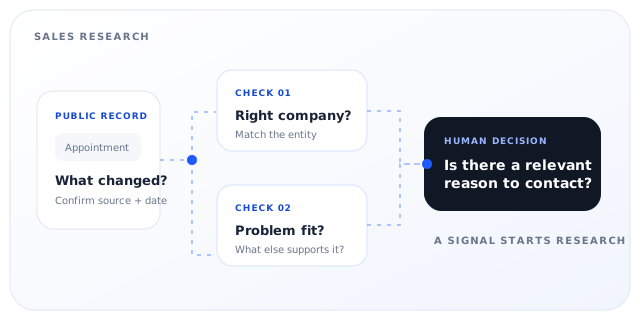
Treat a company change as a lead for research, not evidence of purchase intent. Confirm the event in its original source, check whether it matters to the problem you solve, find a relevant person and choose an appropriate channel. If you cannot explain the link in one plain sentence, keep researching or do not contact.
- A public event confirms an event, not a need.
- Verify the record, date and current role before writing.
- Test the link between the change and a real customer problem.
- Keep a human stop decision in the workflow.
What a company change tells you
A filing or director appointment can give you a fact to check. It does not reveal a company's budget, priorities or intention to buy. Treat the change as a research prompt: it helps you decide what to look at next.
If you write as though a public event proves someone needs your product, your message is likely to feel presumptuous. Verify the event and connect it to a problem you genuinely solve before deciding whether contact makes sense.
1. Confirm the event in its original source
Start with the company's filing or public record. The Companies House register provides company information and filings for registered companies. Check the company name and number, the type of filing and its date. Do not rely on a search snippet if the original record is available.
Then check whether the detail is current and relevant to the business you want to reach. A filing date and the date a change took effect may differ. A registered address can differ from a trading location. Record what the source says, not what you assume it means.
2. Ask whether the change connects to your offer
Make the link between the event and your customer's problem explicit. If you cannot explain it in one plain sentence, you may not have a useful reason to contact them yet.
Keep “might” in the reasoning until the company confirms more. A new director may change nothing. A registered-address update may not mean the firm has moved its operations. Research should make your message more accurate, not turn a guess into a claim.
3. Find the person who can speak to the issue
Choose a contact because their role connects to the problem you solve, not just because their name appears on a filing. Check the person's current role and the business's preferred contact route. If the role or relationship is unclear, verify it before writing.
Choose the channel only after checking the recipient and the rules that apply. UK GDPR applies when you use personal data. PECR email rules differ between corporate and individual subscribers; the ICO's business-to-business guidance explains the categories and sender responsibilities. The guidance is under review following changes made by the Data (Use and Access) Act, so check the current version. A public filing is not permission to send marketing.
4. Write about the business, not the filing
Use the event to guide your research. The first line should show why the message may be relevant to the recipient's work. Avoid congratulating someone on a change you cannot verify or implying you know what they plan to do.
“I saw that Northbank Engineering has registered a second operating site in Leeds. We help UK sales teams build a clearer picture of the companies they want to reach. Would a short example of how we check company and contact details be useful?”
Northbank Engineering is fictional. The point is the link between a checked fact and a specific business question; the recipient can correct the assumption or say it is not relevant.
5. Decide whether to contact at all
Do not send if the event is unclear, the person is not a fit, the link to your offer is weak or the channel is not appropriate. A useful workflow includes a stop decision. “We found a change” is not the same as “we should contact them.”
If contact is appropriate, keep the message short, say who you are, make one relevant ask and provide a clear way to object or opt out where required. Record the source and your reason for choosing the account so the next person can see the context.
A simple research-to-contact checklist
- Open the original company record.
- Confirm the event, date and entity.
- Check another reliable source if the detail matters to your decision.
- Write down what the change could mean and what it does not prove.
- Choose a contact whose role fits the problem.
- Check current rules for the recipient and channel.
- Contact only if you can explain the relevance plainly.
Adapt Insights can surface business changes for further research. A signal should help your team ask a better question; it should not decide on its own that a company is ready to buy.
Sales research
Turning a company change into useful research
Does a director appointment mean the company is buying?
No. It tells you that an appointment was recorded. It does not show what the company plans to change or whether it needs your product.
Can I use a public filing in a sales email?
A public record can inform your research. It does not remove the need to follow data-protection and channel rules. Check the recipient and your intended use before sending.
What if I cannot confirm the change?
Do not present it as fact. Check another reliable source or leave it out of the message.
What makes a useful first message?
A checked detail, a clear link to a problem you can solve and one relevant question. Do not claim to know the recipient’s plans.
Make the next step relevant
Start with the company, check what changed and decide whether there is a reason to contact.
Explore Adapt InsightsTalk to us